1898 — H. G. Wells (Original)
Loading the original passage…
CLASSIC STORIES. A FRESH LOOK.
Great books aren’t necessarily perfect books.
One More Pass takes public-domain classics and asks a simple question: what happens if we give them one more careful developmental edit — strengthening what genuinely needs strengthening while protecting what made the original worth reading?
We publish the result. We show our changes. You decide whether they worked.
“SAME STORY.
ANOTHER
PERSPECTIVE.”
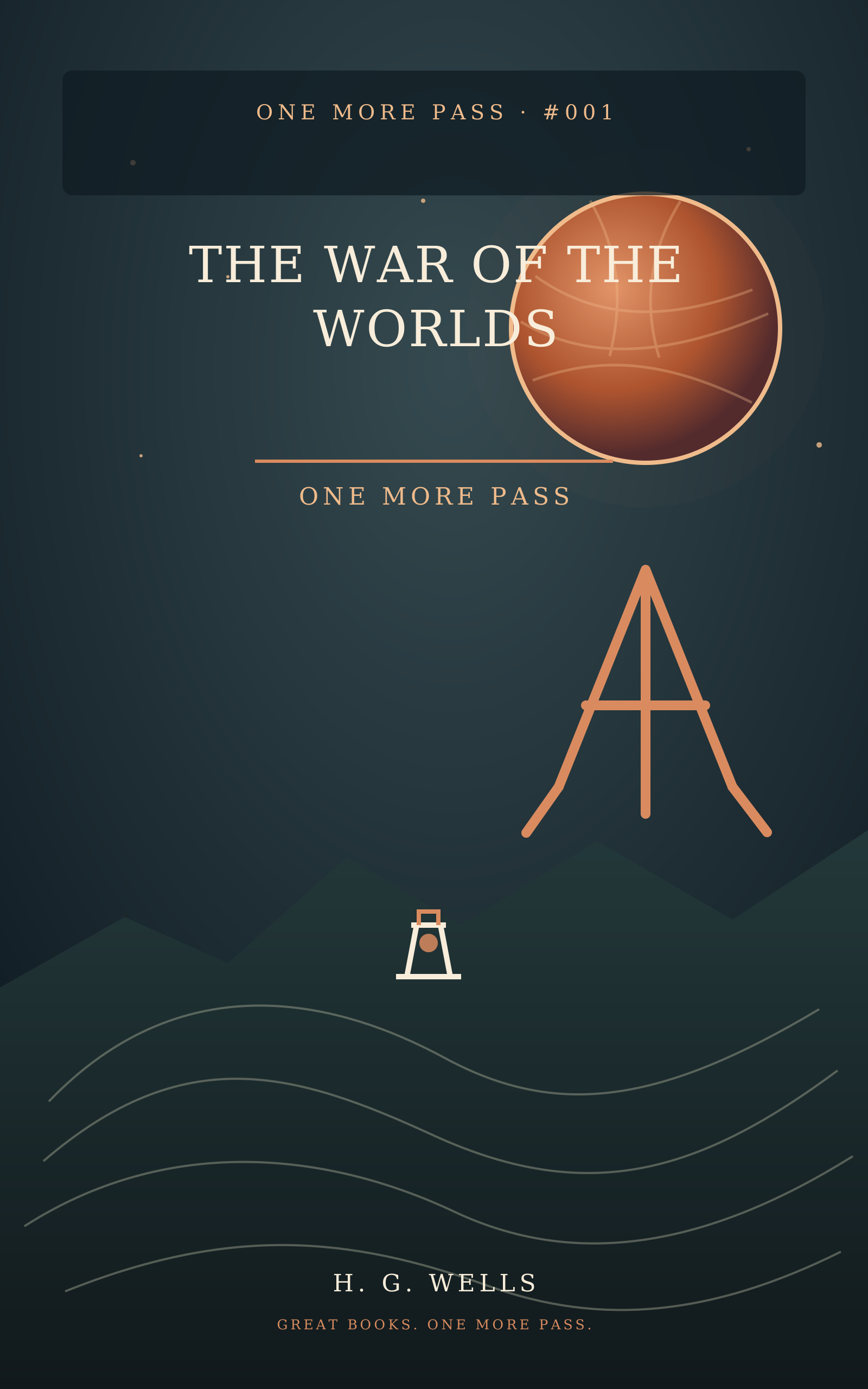
EXPERIMENT 001
One More Pass Edition
A modern reader’s edition of a groundbreaking classic — with targeted changes, a documented process, and an open invitation to compare.
This is an editorial experiment in preview. Publication and retailer links will appear only after a separate release decision.
SAME PASSAGE, ONE MORE PASS.
A real example from the opening, showing the original and our edited version. Read both before you decide.
1898 — H. G. Wells (Original)
Loading the original passage…
2026 — One More Pass (Edited)
Loading the edited passage…
THE EXPERIMENT
Find weaknesses and identify what must be protected.
Make a bounded set of changes.
Look specifically for things the rewrite may have made worse.
Show the significant changes and trade-offs.
Read both. Compare. Argue with us.
EXPERIMENT 001
A documented editorial choice, not a verdict.The narrator’s wife becomes more of an independent actor.
Consequences carry more consistently between scenes.
Fear, guilt and survival decisions accumulate rather than reset.
Some explanatory and transitional material is compressed.
Potential losses in strangeness, narrative distance and some of Wells’s more eccentric speculative texture.
THE FIRST RELEASE SLATE
The first One More Pass programme is being prepared as six separate editorial experiments. The War of the Worlds is the featured case on this site; the other five are shown here as works in preparation, not finished or publication-approved editions.
Loading the first release slate…
A NOTE ON THE WORK
One More Pass uses AI-assisted critique and rewriting within a human-directed editorial process. The project does not claim to correct classic books or replace their authors. The source text is the comparison authority; readers are invited to keep, reject or complicate every change.
No reader metrics or aggregated verdicts are shown yet. This first release saves a verdict only in the reader’s own browser.